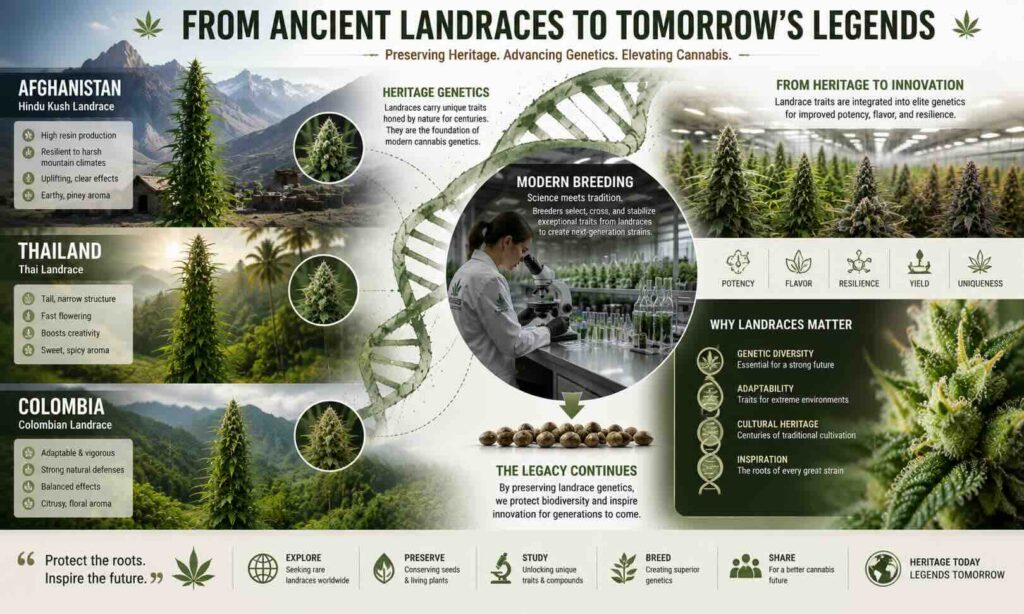
Long before commercial seed banks, large-scale breeding programs, and modern hybrid cultivars existed, cannabis grew in diverse regions around the world as naturally adapted populations. These original populations, commonly known as landrace strains, form the foundation of nearly every modern cannabis variety available today. Their influence extends throughout the cannabis industry, making them one of the most important topics for anyone interested in genetics and plant development.
Landrace strains developed over many generations in specific geographic regions. Local climates, altitude, rainfall patterns, temperature fluctuations, and seasonal changes all contributed to their evolution. Because these populations adapted naturally to their environments, they often display unique traits that remain valuable to breeders even decades later.
What Defines a Landrace Strain?
A landrace strain is generally considered a cannabis population that evolved in relative isolation within a particular region. Unlike modern hybrids, which are the result of intentional breeding projects, landraces were primarily shaped by environmental pressures and natural selection.
These populations developed stable characteristics that allowed them to thrive under local conditions. Over time, growers and collectors recognized that plants from different regions often displayed distinct growth patterns, structures, flowering times, and environmental adaptations.
Many of the genetic resources used in modern breeding programs can be traced back to landrace populations collected from various parts of Asia, Africa, the Middle East, and other regions where cannabis had been cultivated for generations.
This natural diversity remains one of the greatest strengths of cannabis genetics.
Why Landrace Genetics Are Valuable
Landrace strains provide breeders with access to traits that may be difficult to find in heavily hybridized populations. Because these genetics evolved over long periods without extensive modern intervention, they often contain unique combinations of characteristics that can contribute value to future breeding projects.
Breeders frequently search for genetic diversity when developing new cultivars. A broader genetic base creates more opportunities to improve vigor, stability, adaptability, and overall cultivation performance. Landrace populations help preserve that diversity.
Many successful breeding projects begin with the goal of introducing specific characteristics from older genetics into newer lines. This approach allows breeders to combine historical traits with modern breeding objectives.
The preservation of diverse genetics helps ensure long-term opportunities for innovation.
How Landraces Contributed to Modern Hybrids
The majority of modern cannabis cultivars are hybrids. These plants often contain genetic contributions from multiple sources that have been combined through decades of selective breeding. Despite the complexity of today’s hybrids, many of their most valuable characteristics originated within landrace populations.
When breeders began crossing plants from different regions, they discovered entirely new possibilities. Traits that evolved separately could be combined within a single cultivar, creating plants with improved adaptability, consistency, and performance.
Many modern breeding programs continue building upon these foundations. Growers interested in learning more about contemporary cannabis genetics can explore resources through ww.ministryofcannabis.com, where the relationship between breeding and genetic development remains an important subject.
The success of modern hybrids would not have been possible without the genetic diversity preserved within older populations.
The Challenge of Preserving Landrace Genetics
As cannabis breeding has become increasingly sophisticated, concerns about preserving original genetics have grown. Some landrace populations face challenges due to modernization, environmental changes, and the spread of hybrid cultivars into traditional growing regions.
For this reason, many breeders, collectors, and researchers emphasize the importance of conservation. Preserving landrace genetics helps protect valuable traits that may become increasingly important in future breeding efforts.
Genetic preservation also helps maintain a living record of cannabis history. Every landrace population represents a unique chapter in the evolution of the plant.
Conservation efforts support both historical understanding and future innovation.
The Future of Landraces in Breeding
Landrace genetics will likely remain important for many years to come. As breeding projects continue advancing, access to diverse and historically significant genetics may become even more valuable. Breeders constantly seek new opportunities to strengthen cultivars, improve stability, and introduce desirable traits.
Modern technology allows researchers and breeders to study cannabis genetics in greater detail than ever before. However, even the most advanced tools depend on access to diverse genetic resources. Landrace populations continue providing those resources.
Additional information about medical cannabis developments and related topics can be explored through https://lecannabiste.com/category/cannabis-medical/.
The future of cannabis breeding will likely involve a balance between innovation and preservation, ensuring that valuable genetics remain available for future generations.
Final Thoughts
Landrace cannabis strains play a fundamental role in modern breeding because they provide the genetic foundation upon which countless cultivars have been built. Their diversity, adaptability, and historical importance continue influencing cannabis development throughout the world.
By preserving these unique populations while continuing to innovate responsibly, breeders help ensure that cannabis genetics remain diverse, resilient, and capable of supporting future cultivation goals. The story of modern cannabis breeding ultimately begins with the landraces that made everything else possible.